
Nushape has been making wearable red light therapy devices since 2015. The catalog runs from a $6.99 guide to a full-body pod, and almost nobody buys the expensive end on the first visit. The store had to teach, prove and sell in that order, then keep doing it across search and paid social.
Nushape was founded in 2015 by Jessica Charles, who developed the first wearable red light therapy device after working with professional systems in her own practice. A decade on, the range covers wearables, mats, masks, a full-body pod and supporting products.
This is a considered purchase in an unfamiliar category. A visitor arrives curious rather than convinced, usually from social, and wants to understand what the technology is before they will look at a four-figure price.
The catalog makes that harder, not easier. A first-time buyer picking up an accessory and a serious buyer choosing between a mat and a pod need very different amounts of explanation from the same store.
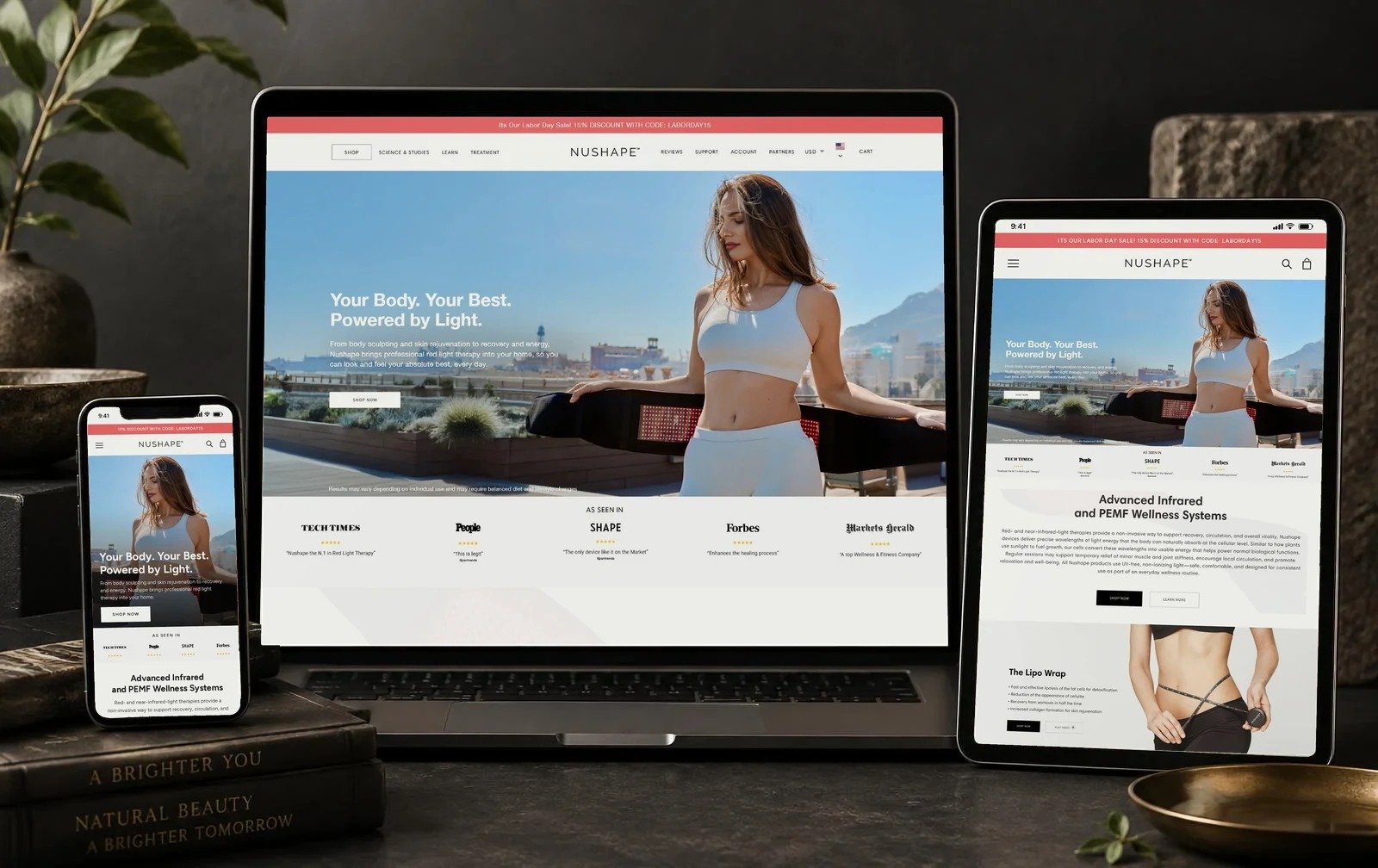
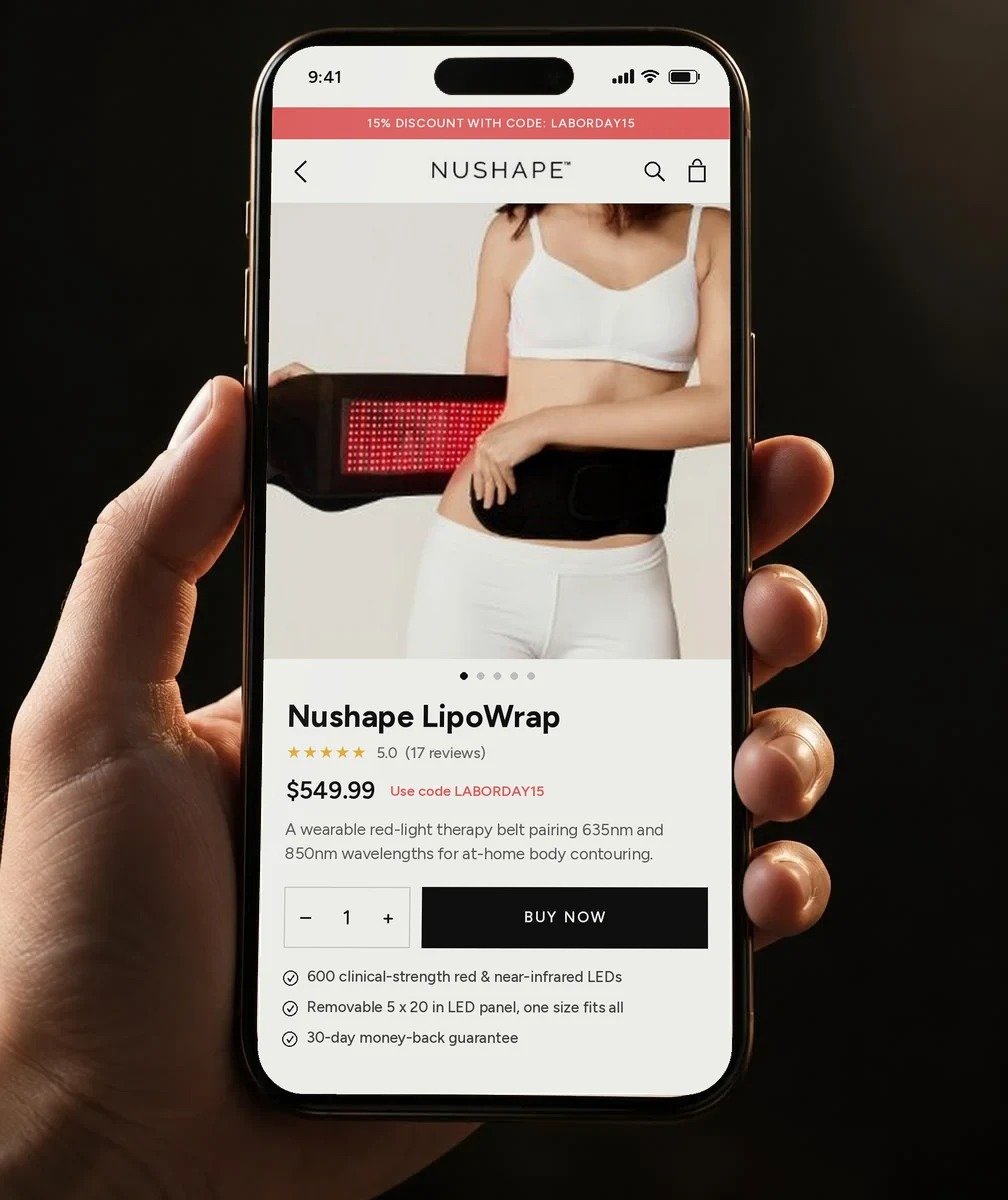
The products did not change. What changed is how someone new to the category gets from curiosity to a decision they feel sure about.
The products did not change. What changed is how someone new to the category gets from curiosity to a decision they feel sure about.
The products did not change. What changed is how someone new to the category gets from curiosity to a decision they feel sure about.
| Metric | Result | Period | Source |
|---|---|---|---|
| Treatment paths merchandised | 8 | Ongoing | Site structure |
| Price ladder served | $7 → $1,999 | Ongoing | Catalog |
| Currencies at checkout | 90+ | Ongoing | Store settings |
| Organic growth | [CONFIRM: metric + figure, e.g. 300% organic sessions] | [window] | GA4 / Search Console |
| Monthly revenue | [CONFIRM figure, e.g. USD 150,000+/mo] | [window] | Client-reported |
| [OPTIONAL: Blended ROAS] | [CONFIRM or delete row] | [window] | Ad platforms |
Scope figures come from the store itself: its structure, catalog and settings. Growth and revenue figures come from the client's own analytics and finance records. We put the source next to each number rather than presenting them all as equally verified.
“ TEAM NUSHAPE QUOTE — confirm it is approved for reuse ”
High-ticket and technical products fail at the same two points: the page does not answer the question the buyer is actually asking, and the traffic is not the right traffic. Usually it is both.
High-ticket and technical products fail at the same two points: the page does not answer the question the buyer is actually asking, and the traffic is not the right traffic. Usually it is both.
High-ticket and technical products fail at the same two points: the page does not answer the question the buyer is actually asking, and the traffic is not the right traffic. Usually it is both.
Selling a considered, high-ticket product in a category most visitors have never heard of, while the same store also has to sell a $39 accessory. The fix was a goal-led structure with the evidence placed where people hesitate.
Yes. Nushape runs a catalog from under ten dollars to two thousand, with long specification pages, model comparisons and an education layer built into the buying path rather than parked in a blog.
Structure the store around the customer’s goal, put the research and customer stories next to the decision, and let the product page be as long as the question requires without hiding the price.
Yes, within platform policy. Campaigns and landing pages describe the product accurately and avoid claims the platforms do not allow, which is also what keeps an account from being restricted.
Both on this project. Search covers people already researching the category; Meta and TikTok reach the larger group who have not met it yet.
Send one paragraph. You get a channel mix, scope, budget range and timeline back within 24 hours — from a senior specialist, not a salesperson.